Fall Preventative Maintenance Checklist for Kansas City Commercial Buildings
Call 913-481-0505- Licensed, Bonded & Insured
- 20+ Years Diamond Strong
- WBE · SLBE Certified
- Top 10 Small Business
Fall is the one point in the year when every mechanical system in your building can be checked in a single pass. The cooling side has just come off its hardest months. The heating side has been idle since spring and has not yet been asked to carry a cold morning. And the plumbing outside your walls is still set up for summer, with hose bibs live, irrigation charged and backflow assemblies sitting in the open.
This checklist puts the fall HVAC and plumbing work for a Kansas City commercial building on one page, sorted into what you or your maintenance staff can check this week and what belongs with a licensed technician. Where a single item deserves more depth, we link to the post that covers it.
Why fall is the window for both trades
In the Kansas City metro the heating season runs roughly from September into February, and the first cold morning is when a weak heating unit, a tired boiler or an unprotected water line gives itself away. By then the building needs heat and water that day, and any repair has to happen on the failure's schedule.
Doing the checks now gives you two advantages. Repairs can be scheduled around your operating hours instead of around an outage, and one visit can cover the roof, the mechanical room and the exterior plumbing while a technician is already on site. Our post on the early fall shoulder season covers how to run your HVAC through the weeks when mornings need heat and afternoons still need cooling.
The HVAC side of the checklist
Test the heat before you need it
Pick a mild day and run each rooftop unit, furnace and unit heater in heating mode long enough to confirm it lights, holds a flame and moves warm air to the space it serves. A unit that short-cycles, smells of burning dust for more than the first few minutes, or trips a breaker is telling you something while the weather still gives you time to act on it.
Gas-fired equipment then needs a technician's inspection. That means checking the burners, ignition, gas valve and flue, and looking over the heat exchanger for cracks, because a cracked exchanger can let combustion gases, including carbon monoxide, into the airstream. That part of the job is not one to hand to a staff member with a flashlight.
Clean up after the cooling season
Your condenser coils have spent the summer pulling in cottonwood fluff, grass clippings and dust, and fall adds leaves to the mix. Clear the leaves and debris from around each unit now, and put the coil cleaning itself on the calendar for early spring. Cleaning the coils at the start of spring means the system can be cycled and any other problems caught before the cooling season puts it to work. Clear the condensate drain lines and pans this fall. A line that clogged quietly in August can still be holding water, so clear those lines before the first hard freeze.
Change the filters as the building closes up. With windows shut and doors held closed against the cold, more of your air gets recirculated, so the filter does more of the work of keeping the space breathable for the people inside.
Reset the controls for winter hours
Look at your thermostat and building automation schedules with fall hours in mind. Occupied and unoccupied setpoints that made sense in July may be wrong now, and holiday closures are coming. If your system uses an automatic changeover, confirm the dead band between heating and cooling is set so the equipment is not switching modes all day.
Check the equipment the cold will lean on
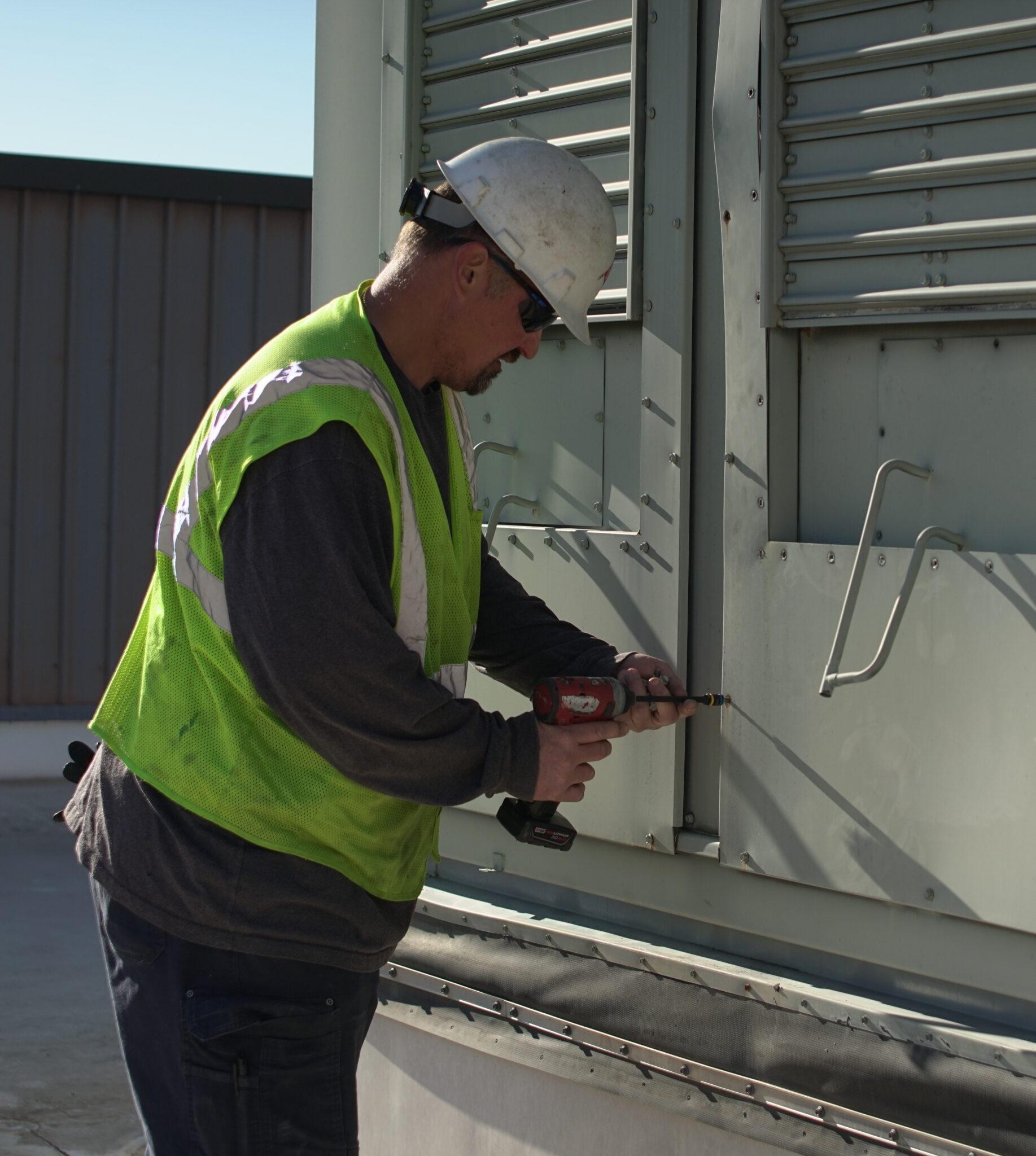
Warehouses, distribution centers and shops with dock doors depend on make-up air units and unit heaters once the weather turns. Run them now, listen for worn belts and bearings, and confirm the panels and curbs on rooftop equipment are fastened before winter wind arrives. A loose access panel on a roof is a small fix in October and a water leak in January. If your building runs on rooftop units, our page on rooftop unit service explains what a technician looks at on each one.
The plumbing side of the checklist
Shut down and protect the exterior
Start outside, because exterior lines are where a freeze does its damage first. Shut off and drain hose bibs that will not be used through the winter. Have irrigation systems shut down and blown out. Backflow preventers mounted outdoors need insulation or an enclosure, and if your water provider requires an annual backflow test, fall is a sensible time to get it done while the assembly is still easy to reach.
Find the pipes that live in the cold
Walk the building and note every water line that runs through a space the heat does not reach: loading docks, mechanical rooms on exterior walls, crawl spaces, and ceilings above dock doors or entry vestibules. Those are the lines to insulate or heat-trace before the first hard freeze. While you are walking, confirm that the main water shutoff is labeled and that more than one person on site can reach it after hours.
Service the water heater and boiler
A commercial water heater collects sediment over the year, and a heavy layer makes the unit work harder and shortens its life. Fall is a good time to have it flushed and the temperature and pressure relief valve tested. A building heated by a boiler should have it inspected before the heating season starts, including its pressure, its controls and any signs of leaking. Our boiler and water heater page lists the symptoms that usually mean a repair is due.
Clear the drains before the holidays
Grease and food waste move more slowly through a cooling line, and kitchens and break rooms tend to get busier as the year winds down. Scheduling drain cleaning in the fall, with a camera inspection on any line that has backed up before, keeps a slow drain from becoming a backup during your busiest weeks. Our guide to how often to clean a commercial drain can help you set the interval. If temperature swings have been hard on your building this year, we wrote separately about what hot and cold cycles do to commercial plumbing.
Your fall walk-through on one page
Print this and take it with you. The first list is work your maintenance staff can handle. The second list is for a licensed technician.
You or your staff can check
- Run each heating unit on a mild day and note any that fail to light, short-cycle or trip a breaker.
- Clear leaves and debris from around outdoor HVAC equipment.
- Replace air filters as the building closes up for the season.
- Update thermostat schedules for fall hours and upcoming holiday closures.
- Shut off and drain exterior hose bibs.
- List every water line in an unheated space, and label the main water shutoff.
- Watch the water bill for an unexplained increase, which can point to a hidden leak.
Hand to a technician
- Inspection of burners, ignition, gas valves, flues and heat exchangers.
- Condensate line clearing, with condenser coil cleaning booked for a spring pre-season check.
- Belt, bearing and panel checks on rooftop units, make-up air units and unit heaters.
- Irrigation blowout and backflow testing.
- Insulation or heat trace on exposed lines.
- Water heater flush, relief valve test and boiler inspection.
- Drain cleaning and camera inspection of problem lines.
Ready to book the technician list? Call 913-481-0505 or send us your building details.
One call covers both lists
DMC Service runs its HVAC and plumbing teams out of the same office in Olathe, so the technician list above does not need two contractors or two schedules. We build each preventative maintenance plan around the building itself, starting with a walk of the site, and for most commercial systems we recommend quarterly visits with a full inspection ahead of the heating and cooling seasons. You can read how that works on our HVAC inspections and preventative maintenance page, and see the plumbing side on our commercial plumbing services page.
If something on the list is already failing, do not wait for the scheduled visit. Call 913-481-0505 any hour of any day, and a person will answer and get a technician moving.
Founded in 2004, DMC Service, Inc. is proud of our decades of service to the Kansas City Metro and beyond. Based out of Olathe, we are a 100% woman-owned business with Karen Crnkovich at the helm as President and "Chief Handshaker." Karen leads the DMC Service team to keep people comfortable, safe and healthy.
What our customers say
Talk to a DMC technician today
Call our 24/7 customer service line. We are Diamond Strong.